
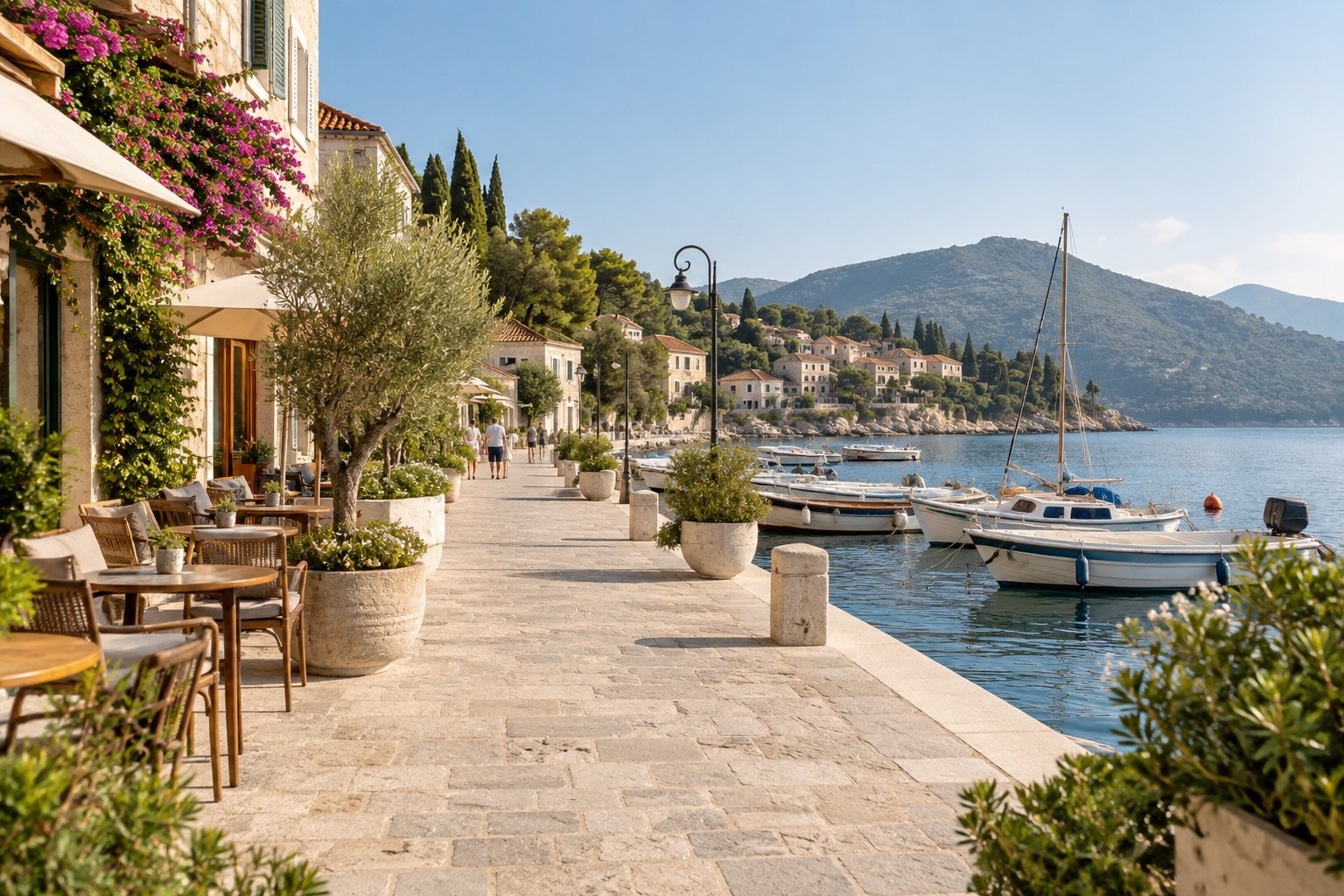
If we set aside the very small number of hotels that can operate successfully regardless of their destination, we can confidently say that a good destination is the key to a hotel’s success.
An absence of management, or so-called haphazard destination management, is very “popular” and widespread in our region. The result is almost always a lacklustre, indistinct and highly seasonal destination, which in turn leads to disastrous financial results. There are cases where tourism simply “happens” to a destination, but these are exceptionally rare and unpredictable. The causes include wars or pandemics in competing markets, or private initiatives within the destination, such as major financial investment in hotels, resorts and marinas, and the organisation of various events, including festivals and sporting events.
Tourism that simply “happens” can easily be a double-edged sword: unprepared stakeholders within a destination cannot reliably deliver a quality service, resulting in tourism growth that is only short-lived, followed by a very substantial decline.
In very practical terms, in an “accidental” destination it is almost impossible for a hotel to find a good workforce, the offer beyond accommodation and meals is insufficient to keep hotel guests satisfied, and limitations in the essentials required to run a hotel, such as electricity, water and a functioning sewerage network, make hotel operations difficult. Congested roads and insufficient parking likewise fail to meet the needs created when the number of people staying in the destination multiplies.
These problems make life unsustainable for local residents, and the gulf that opens up between irritated residents and all those involved in tourism in the area is a clear negative sign and a source of endless problems.
Destination management must be a carefully considered strategic activity that develops a destination’s strengths consistently and sustainably, following a precisely defined timetable and financial plan. A focus on natural beauty, historical sites, bringing legends to life, a rich food and wine offer and the organisation of various events inevitably leads to a significant improvement in all the performance indicators of the existing season, while also extending it, which is a clear objective. It is also very important to mention destinations that have co-funded the arrival of low-cost airlines, making the destination affordable and easily accessible. Distant destinations have thus become weekend destinations. In this case, we can certainly say that the destination has a positive impact on the hotel’s business.
Tourism councils and tourist boards should be precisely the places where these optimal solutions are found. I would identify hotels as key tourism “multipliers”: they generate the most jobs within the destination, promote it, include local suppliers in their supply chains and, through the payment of various taxes and charges, help fund tourist boards and local authorities.
The environmental sustainability of a destination is an increasingly discussed topic and is very important when taking a long-term view. The pollution generated by the tourism industry is certainly not negligible. Particular concerns include increased road traffic and the resulting rise in exhaust emissions, a growing number of vessels discharging their wastewater into the sea, and the increase in rubbish generated by guests on holiday.
Effective promotion highlights the best of a destination and attracts a particular segment of potential guests who are perfectly suited to the character of the destination and its accommodation. Here, too, we can speak of a distinctly positive effect of the destination, which creates the conditions for the development of hotel and private accommodation.
Which source market to choose, which market segment to address, which promotional channels to use, how to shape the promotional message and what exactly to promote are the fundamental questions to ask before deciding on a promotional strategy.
In light of all this, only when all the stakeholders within a tourism destination come together and create synergy through their joint efforts can we speak of a successful tourism product that is competitive in both the domestic and international markets.